15 Hidden Architectural Secrets: Ancient Engineering Wonders
Explore 15 architectural secrets across eight countries, from Nubian vaults and Roman concrete to Petra's ingenious water systems.
History is full of architectural surprises: ingenious ancient Egyptian vaulted roofs built without timber scaffolding, hidden engineering masterpieces in Turkey, the Romans' remarkable self-healing concrete, sophisticated water systems in the Jordanian desert, and Portugal's churches adorned with intricate stone-carved ship's ropes. Beyond their beauty, these extraordinary creations reveal the ingenuity, craftsmanship and imagination of the civilisations that built them.
Turkey
1. Mimar Sinan's hidden structural engineering
Sinan was a master at concealing the engineering behind his magnificent interiors. He incorporated massive supporting piers and buttresses into the surrounding structure, allowing the interiors to appear more open, spacious and uninterrupted. His designs were as much about engineering as beauty.2. Hagia Sophia – putting a circular dome on a square building
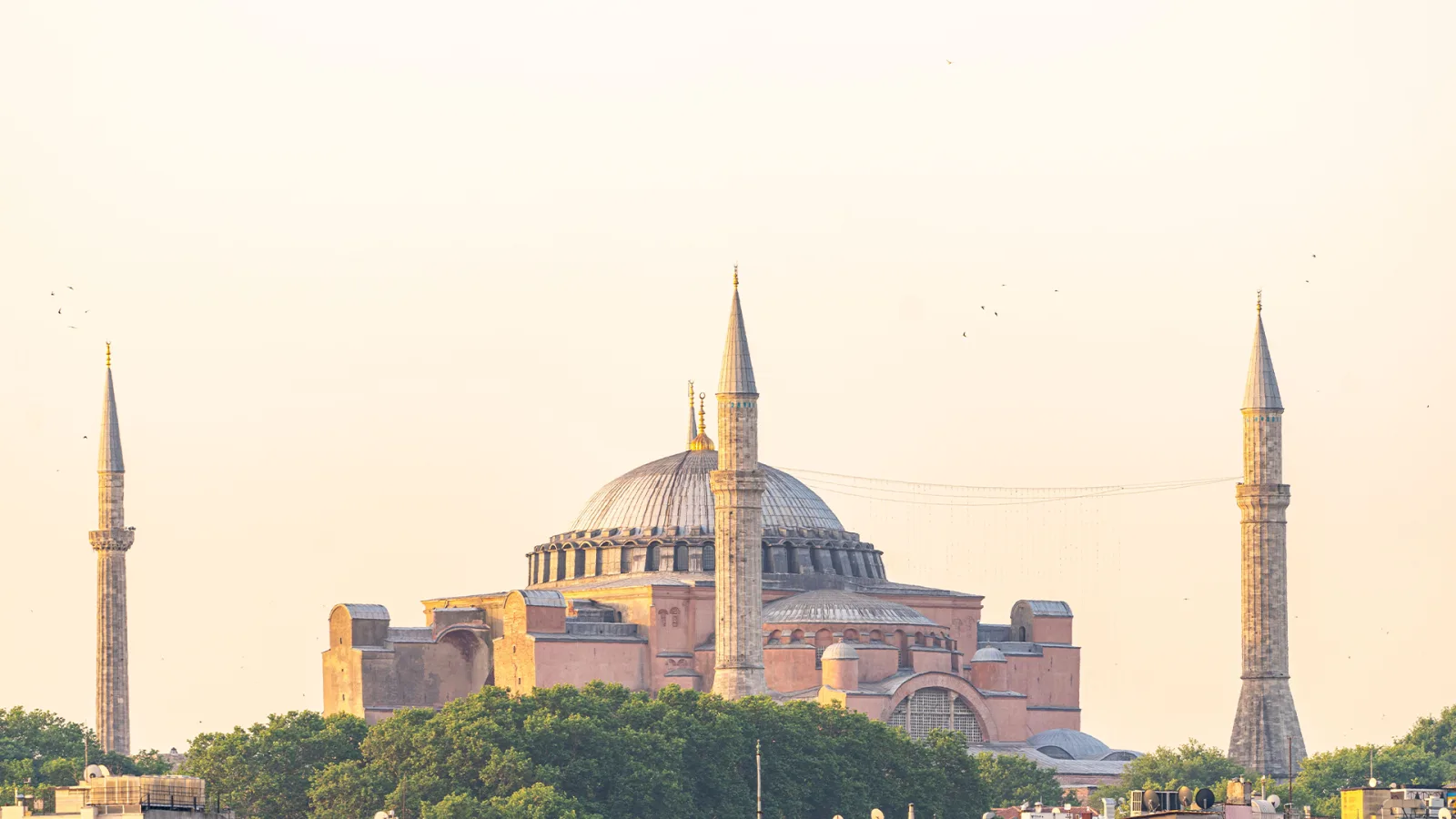
One of the great Byzantine engineering achievements was the use of pendentives: curved triangular sections that allow a huge circular dome to rest above a square space. This solution helped transform how monumental domed buildings were designed.Greece
3. The Parthenon – a building with almost no perfectly straight lines
The ancient Greeks deliberately introduced subtle curves into the building. The floor rises slightly towards the centre, columns swell gently in the middle (entasis), and corner columns are thicker. These optical refinements compensate for visual distortions and give the temple its extraordinary appearance of perfection.4. Mycenae – building enormous domes without modern engineering
The Treasury of Atreus, built around 1250 BC, has a monumental beehive-shaped chamber constructed using successive rings of enormous stone blocks. Each layer projects slightly further inwards until the structure closes at the top. This is known as corbelled construction and was achieved without a conventional supporting framework or a true arch.Egypt
5. Nubian vaults – building roofs without timber or scaffolding
An ancient construction technique from Upper Egypt used sun-dried mud bricks to create vaulted roofs without wooden supporting frameworks. The bricks were laid at an angle against an existing wall, with each course supporting the next. Some ancient examples at Luxor have survived for more than 3,300 years.6. The Unfinished Obelisk – a single stone weighing over 1,000 tonnes
In Aswan, an enormous obelisk remains attached to the bedrock where ancient craftsmen abandoned it after discovering cracks in the granite. Had it been completed, it would have weighed approximately 1,168 tonnes and measured around 42 metres high. It offers a remarkable insight into how the ancient Egyptians worked with colossal single pieces of stone.Jordan
7. Petra – an advanced water system hidden in the desert
The Nabataeans developed an extraordinary network of rock-cut channels, ceramic pipes, dams, cisterns and reservoirs. They even constructed a diversion tunnel to protect the city from flash floods. Their hydraulic engineering enabled a thriving city to exist in an extremely dry environment.8. Masada – a luxury palace with its own desert water supply
King Herod transformed a remote mountaintop into a luxurious palace complex. His engineers collected rainwater and floodwater through channels and aqueducts, storing it in enormous cisterns carved into the mountain. The system was designed to sustain a substantial population for years, despite the exceptionally arid surroundings.Croatia
9. Diocletian's Palace – an underground replica of the emperor's residence
The enormous vaulted substructures beneath the palace were built to level the sloping coastal terrain and support the imperial apartments above. Remarkably, their layout mirrors much of the arrangement of the original rooms upstairs. Today, these underground spaces are among the best-preserved examples of late Roman architectureItaly
10. Roman concrete – a possible self-repairing building material
Recent scientific research has found that some ancient Roman concrete contained tiny lime-rich fragments. When cracks formed and water entered, these fragments could dissolve and help fill the cracks with newly formed minerals. In other words, certain Roman concrete mixtures had a natural self-healing ability.11. The Pantheon – a concrete dome that has survived almost 2,000 years
The Romans used progressively lighter aggregates as the dome rose: heavier materials towards the bottom and lighter volcanic materials towards the top. The dome also becomes thinner towards its summit. Its enormous unsupported span remains one of the great achievements of ancient engineering.\Spain
12. The Alhambra – water engineering that made a palace possible
Built on a hill overlooking Granada, the Alhambra depended on an ingenious hydraulic system that transported water from the Darro River through canals, aqueducts and underground channels. Water was distributed by gravity to gardens, fountains, baths and courtyards. Special mechanisms were also used to raise water to higher levels. It was both practical engineering and an essential part of the palace's beauty.13. Andalusia – architecture designed around cooling water and shade
Moorish and Andalusian architecture made clever use of courtyards, fountains, reflective pools, shaded galleries and carefully positioned openings. Moving water and shaded spaces helped create cooler microclimates during scorching summers. These were not simply decorative touches but part of an intelligent approach to living in a hot climate.Portugal
14. Jerónimos Monastery – stone that looks like twisted ship's ropes
At Jerónimos Monastery, you can find intricately carved ropes, knots, shells, anchors, seaweed and nautical symbols. These decorations celebrated Portugal's maritime discoveries and the country's seafaring power. The extraordinary detail makes parts of the monastery look almost as though they have been woven rather than carved.15. Tomar – a window that looks more like a sculpture than architecture
The famous Chapter House Window at the Convent of Christ is one of Portugal's most extraordinary examples of Manueline stone carving. Its elaborate decoration includes twisted ropes, knots, vegetation, maritime references and royal symbols. The stonework is so intricate that it appears almost impossible to have been carved by hand.Frequently Asked Questions About Architecture & Ancient Engineering
What are some of the most fascinating architectural secrets in history?
Some of history's most fascinating architectural secrets involve ingenious construction techniques that are not immediately visible. Examples include the pendentives that support Hagia Sophia's massive dome, the self-repairing properties discovered in certain Roman concrete mixtures, the ancient Nubian vaulting technique and the Nabataeans' sophisticated water systems in Petra. These innovations reveal how historical civilisations solved complex engineering challenges with the materials and knowledge available to them.
How did ancient civilisations build impressive structures without modern technology?
Ancient builders relied on a deep understanding of materials, geometry, structural balance and practical engineering. The Mycenaeans used corbelled construction to create enormous stone chambers, while ancient Egyptian builders developed Nubian vaults using sun-dried mud bricks without timber scaffolding. Roman engineers also experimented with different concrete aggregates and structural forms to create remarkably durable buildings.
How did ancient cities manage water in dry environments?
Several historical civilisations developed ingenious water systems to support life in challenging environments. In Petra, the Nabataeans constructed channels, ceramic pipes, dams, cisterns and reservoirs to collect and distribute water. At Masada, engineers created channels and large mountain cisterns to store rainwater and floodwater. The Alhambra in Granada also relied on canals, aqueducts and underground channels to supply its gardens, fountains and buildings.
What made Roman concrete so durable?
Some ancient Roman concrete mixtures contained small lime-rich fragments that could contribute to a natural self-healing process. When cracks developed and water entered, these fragments could dissolve and help fill the cracks with newly formed minerals. This discovery has offered valuable insight into why certain Roman concrete structures have remained remarkably durable for centuries.
Which historical buildings feature unusual architectural details?
Several structures stand out for their unusual craftsmanship. The Parthenon features subtle optical refinements, including gently curved surfaces and slightly swollen columns. The Jerónimos Monastery in Lisbon is decorated with elaborate maritime carvings, while the Convent of Christ in Tomar features the extraordinary Chapter House Window, with stonework resembling twisted ropes, knots and other maritime symbols.
What are some of the most remarkable examples of ancient engineering?
There are many remarkable examples across different civilisations. Hagia Sophia's dome-supporting pendentives, the Treasury of Atreus in Mycenae, Egypt's Nubian vaulted roofs, Petra's water management system and the Pantheon's enormous concrete dome all demonstrate different approaches to solving complex architectural challenges.
Which countries are featured in this architectural guide?
This guide explores 15 architectural and engineering secrets across eight countries: Turkey, Greece, Egypt, Jordan, Croatia, Italy, Spain and Portugal. Each destination offers a different example of historical craftsmanship, innovative construction and architectural ingenuity.
Final Thoughts
Architecture is about much more than beautiful buildings. Behind many of the world's most remarkable structures lie ingenious solutions to challenges involving gravity, water, materials, climate and construction.
From the Nabataeans' sophisticated water systems in Petra to the Romans' remarkable concrete technology and the intricate stone carvings of Portugal, these 15 examples reveal just how much creativity and engineering knowledge went into shaping the built environment.
The next time you visit a historic monument, take a closer look. Beyond the impressive façades and grand interiors, there may be an extraordinary engineering story hidden in plain sight.