14-Day Egypt & Jordan Itinerary: Cairo, Nile Cruise, Petra & Wadi Rum
Discover Egypt and Jordan in 14 days: Cairo’s pyramids and a Nile cruise, ancient Roman ruins, Petra and Wadi Rum.
Egypt & Jordan in 14 Days: At a Glance
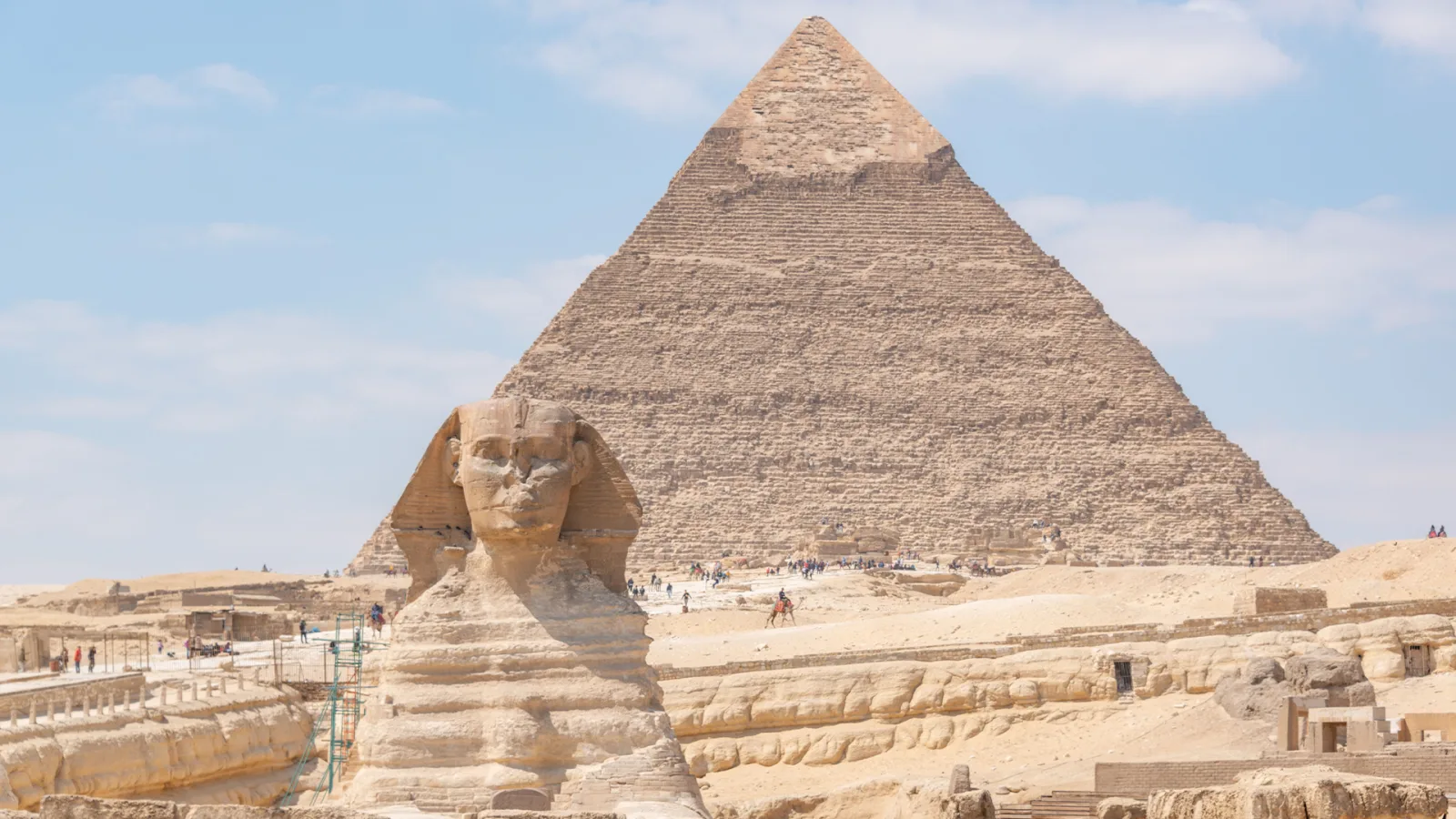
Days 01–02: Cairo, Egypt — Discover the Pyramids of Giza, the Great Sphinx, Memphis and Saqqara.
Days 03–05: Nile Cruise from Aswan to Luxor — Visit the High Dam, Philae Temple, Kom Ombo, Edfu, Valley of the Kings.
Days 06–07: Luxor to Cairo — Explore Luxor & Karnak Temples before return to Cairo, visit the Grand Egyptian Museum & Old Cairo.
Day 08-09: Aqaba & Wadi Rum, Jordan — Enjoy free time in Aqaba then into the desert for overnight at a camp in Wadi Rum.
Day 10-11: Wadi Rum, Little Petra & Petra — Discover Wadi Rum on a 4x4 jeep excursion, visit Petra and Little Petra.
Day 12: Petra to Amman via the King's Highway — Visit Kerak Castle, Wadi Al Mujib, Madaba and Mount Nebo.
Day 13: Jerash, Ajloun & Amman — Discover the Roman ruins of Jerash, Ajloun Castle and the historic highlights of Amman.
Day 14: Departure from Amman — Private transfer to Amman Airport for your international flight.
DAY 01
Welcome to Egypt and the fascinating city of Cairo! Upon arrival at Cairo International Airport, meet for your transfer to the hotel. The remainder of the day is at your leisure to settle in and relax after your journey. Depending on your arrival time and energy, you may wish to enjoy a gentle stroll nearby or experience your first taste of Egyptian cuisine.Overnight in Cairo
DAY 02
Breakfast at the hotel then meet with your private Cairo guide and begin a full-day tour visiting: Memphis, the ancient capital of Egypt dating from 3100BC which contains a beautiful representation of King Ramsis II through his colossal statue; Sakkara where you visit the world-famous Step Pyramid of King Zoser, the oldest known of Egypt's 107 Pyramids; at the Giza Pyramids area, visit the Three Pyramids built for Pharaohs Cheops, Chephren & Mycerinus on the Giza Plateau and the mysterious Sphinx.Overnight in Cairo
DAY 03
Transfer back to Cairo Airport for a morning domestic flight to Aswan. Arrive and transfer to board the 03-night Nile Cruise vessel. Embarkation before lunch. After lunch, depart with your cruise guide to visit the High Dam, one of the biggest dams in the world & an engineering miracle when it was built in the 1960s. Proceed to Philae Temple, dedicated to Goddess Isis and reassembled at a new site 500km from its former site on Philae Island.Overnight on board Nile Cruise
DAY 04
Cruise sails to Kom Ombo, and upon arrival a guided visit of the Temple of Sobek & Haroeris, dedicated to crocodile-god Sobek. The temple stands at a bend in the Nile where, in ancient times, sacred crocodiles basked in the sun on the river bank. Return to the cruise and sail to Edfu. On arrival, guided visit to the Temple of Horus, the largest & most complete preserved Pharaonic temple combining Pharaonic & Greek architecture.Overnight on board Nile Cruise
DAY 05
Sail to Esna then Luxor. On arrival to Luxor, your guide takes you to the West Bank of the Nile to visit the Valley of Kings (3 tombs), a vast "City of the Dead" where magnificent tombs were carved into the desert rocks and filled with treasures for the afterlife by generations of Pharaohs. Proceed to the foot of the cliff to see the Temple of Queen Hatshepsut, the only woman who ruled Egypt in Pharaonic History. On the way back, your road passes by the famed Colossi of Memnon.Overnight on board Nile Cruise
DAY 06
Breakfast, disembark and complete sightseeing with a morning guided visit of Luxor Temple & Karnak Temple. You will then have free time until transfer to Luxor Airport for a flight back to Cairo, followed by a transfer to the hotel.Overnight in Cairo
DAY 07
Breakfast at the hotel then again meet with your private Cairo guide and begin full-day tour visiting the Grand Egyptian Museum (GEM), Citadel of Saladin (Alabaster Mosque & Tomb of Ottoman ruler Mohamed Ali) along with the Old Cairo area where find a mixture between the Islamic and Christian Monuments, such as Abu Serga Church, Al Mo'allaqa Church or Hanging Church dating back to the beginning of the 5th Century AD. End of the day tour with drop off back to the hotel, evening free at leisure.Overnight in Cairo
DAY 08
Transfer to Cairo Airport for a connecting flight to Aqaba (via Amman). Arrive and meet for transfer to the hotel, evening at leisure.Overnight in Aqaba
DAY 09
Breakfast at the hotel, check-out and free time at leisure to explore / enjoy seaside time in Aqaba on your own. In the late afternoon, a 1.5-hour transfer to Wadi RumOvernight at camp in Wadi Rum
DAY 10
Breakfast at the hotel, then hop in a 4x4 with a Bedouin driver to uncover the vast Wadi Rum desert. The rugged landscape, the changing colours of sand and mountains, the serene atmosphere will make you understand why Wadi Rum is one of the most impressive desert landscapes in the world. You see canyons, red sand dunes and Nabatean rock inscriptions. After the approx 3-hour jeep excursion, depart on the 1.5-hour drive to Little Petra, which most likely served as caravan stopping point for Petra. Enter the small site through a narrow gorge, known as Siq Al Barid, to see temples, tombs and water channels carved in the sandstone. One of the caves shows the remains of a Nabatean fresco painting. Then continue on to the hotel in Petra, evening free at leisure.Overnight in Petra
DAY 11
Today visit Petra, the spectacular rose rock city. Petra is the biggest attraction of Jordan and was first established around the 6th century B.C. by the Nabatean Arabs. Meet your private local tour guide who will give you an understanding of Petra’s history (the guide is with you for the first 04-hours of the visit, one way along the main trail). Start with a walk to the canyon, the so-called Siq, at its end you see the most beautiful monument, the Treasury. The building rises over 40 meters and is carved into sandstonelike most of Petra’s architecture. Continue via the Street of Facades, passing by the Theatre to the Royal Tombs. Then climb the 800 stairs to the Monastery El Deir. Here say farewell to the tour guide, and you then have the remainder of the day free to continue exploring around the site on your own.
Overnight in Petra
DAY 12
A long tour day on a scenic route ending in Amman lies ahead of you. Drive to the remains of the Crusader castle Kerak. Explore the underground passageways, enjoy the view and imagine how the forces of Salah ad-Din besieged this stronghold several times. Travel along the famous ancient caravan route of the King’s Way. Short photo stop in WadiAl Mujib, a great wide valley with magnificent geological formation. Onto Madaba, the town known in Jordan as the “City of Mosaic”. See the famous 6th century mosaic map of Jerusalem and the Holy Land at St. George’s Church. Short ride to Mt Nebo. From here overlook the Jordan Valley, the Dead Sea and parts of the Holy Land. According to the Bible this is the place where Prophet Moses was granted to see the Promised Land before he died and alleged to be his burial place. Within an hour you’ll reach the capital Amman, check into the hotel with the evening free at leisure.
Overnight in Amman
DAY 13
Pickup from the Amman hotel lobby, head 50km north to the Roman ruins of Jerash. Set in the hills of Gilead Jerash is the best example of a Roman provincial city in the MiddleEast. Meet your local English-speaking guide (for 01-hour) who will give you a historical insight while showing you around. See the Hippodrome, the spectacular Forum, Colonnaded Street, the Nymphaeum, the Temple of Artemis and the North Theatre. Then to the Islamic castle of Ajloun, in Arabic called Qal’at Ar Rabad. In 1184 during the
Crusades an Arab general and relative of Salah ad-Din built here a fortress on higher grounds. Back in Amman, visit the historical places in downtown. Explore the Citadel hill
with remains from the Roman to the early Islamic period and a small Archaeological Museum. Onto the opposite Roman Theatre from the 2nd century with 6,000 seats. From
here stroll along the vibrant Souq with its different shops and stalls.
Overnight in Amman
DAY 14
Check out and, per the time of your international departure flight, transfer from the hotel to Amman Airport.Planning Your Egypt & Jordan Trip
A journey through Egypt and Jordan combines ancient history, remarkable landscapes and unforgettable cultural experiences. From the Pyramids of Giza, sailing along the Nile, and to discov Petra, a little preparation can make your trip much more enjoyable. Here are some useful things to know before travelling.
What can you expect from a Nile cruise in Egypt?
A Nile cruise offers a memorable way to explore some of Egypt's most important ancient sites between Aswan and Luxor. This itinerary includes a three-night cruise, with visits to the High Dam and Philae Temple in Aswan, the temples of Kom Ombo and Edfu, and the ancient monuments on Luxor's West & East banks. The cruise also provides time to unwind and enjoy the natural scenery as you sail along the Nile between destinations. With breakfast, lunch & dinner included, you never have to worry about where to eat out and can simply relax.
How many days should you spend in Cairo?
This itinerary includes two full sightseeing days that cover some of the most important "must visit" sites of Cairo: the Pyramids of Giza, the Great Sphinx, Memphis, Saqqara, as well as the Grand Egyptian Museum, Saladin Citadel and Old Cairo. This provides a good introduction to Egypt's ancient history and its Islamic and Christian heritage. The evenings are free at leisure to relax after a day full of sightseeing, or for those more adventurous to enjoy a night out and about.
How much time do you need to explore Petra?
The itinerary dedicates a full day to Petra. A local English-speaking guide accompanies you for the first four hours, following the main trail through the Siq to the Treasury, Street of Facades, Theatre and Royal Tombs. After the guided portion, you have free time to continue exploring independently. For those more adventurous (and fit), we highly recommend the Monastery, reached by climbing approximately 800 steps. Comfortable walking shoes and sufficient water are essential for this visit.
Where to Stay in Egypt & Jordan
Where should you stay in Cairo? Downtown or Giza area?
The three main areas (neighbourhoods) of Cairo we recommend are Zamalek, downtown Cairo, or the Giza area. Zamalek offers lovely restaurants, cafés and Nile views, it is more relaxed than downtown Cairo, and is a good balance for visiting sights in and around Old Cairo and Giza. Downtown Cairo is best for those who wish for a city atmosphere and proximity to historic buildings, traditional cafés and Tahrir Square. The Giza Pyramids area is best for those who want the added bonus of views of the Pyramids, be closer to the Grand Egyptian Museum, however it is further from central Cairo's restaurants and attractions.
Suggested hotels: The Cairo Marriott in Zamalek, Stegenberger Hotel El Tahrir for a downtown location, Ramses Hilton along Cairo's El Corniche, and the Stegenberger Pyramids Cairo in the Giza area.
What is it like to stay on a Nile cruise in Egypt?
A Nile cruise is a completely different experience from staying in a hotel. It's one of the loveliest ways to experience the Nile and its beautiful scenery and history while still being able to relax by the water. A typical Nile cruise includes a comfortable cabin, often with panoramic windows, a restaurant with buffet or set-menu meals, a sun deck with a swimming pool and loungers, evening entertainment (sometimes traditional Egyptian music and dancing), and of course guided excursions to ancient temples and archaeological sites.
Where should you stay in Aqaba?
For a short stay in Aqaba, the city centre and waterfront area are convenient choices, with easy access to local restaurants, shops and the Red Sea promenade. If you prefer a more resort-style experience, consider the South Beach or Tala Bay areas, which offer a quieter coastal setting and access to beach facilities. Since this itinerary includes free time by the sea before continuing to Wadi Rum, your choice will depend on whether you prefer being close to the town or enjoying a beach-focused hotel.
Where should you stay in Wadi Rum?
An overnight stay at a Bedouin desert camp is one of the most memorable experiences in Jordan. Rather than a conventional hotel, these camps offer the chance to spend the night surrounded by Wadi Rum's dramatic sandstone mountains and desert scenery. When choosing a camp, check the accommodation facilities in advance, including private bathrooms, heating or air conditioning, and the availability of dinner and breakfast. Some camps also offer panoramic desert views and opportunities for stargazing.
Where is the best place to stay when visiting Petra?
Wadi Musa, the town next to Petra Archaeological Park, is the most convenient place to stay. We recommend choosing a hotel close to the Petra Visitor Centre, particularly if you plan to enter the archaeological site early in the morning. Staying near the entrance also makes it easier to return to your hotel after a full day exploring Petra's trails, monuments and viewpoints. Hotels farther up the hills can offer beautiful views, but may require a taxi or shuttle for the journey back. We most frequently use the Petra Moon Hotel and the Petra Canyon Hotel.
Which area is best for staying in Amman?
Jabal Amman and Jabal Al-Weibdeh are two appealing neighbourhoods for visitors looking for a comfortable base with cafés, restaurants and access to the city's historic attractions. Jabal Amman, particularly around Rainbow Street, is known for its lively dining scene and traditional architecture. Jabal Al-Weibdeh offers a quieter atmosphere with independent cafés, galleries and boutique accommodation. Both are good options for exploring Amman's historic centre.
Food and Dining in Egypt & Jordan
What traditional Egyptian food should you try in Cairo?
Egyptian cuisine is full of comforting dishes, rich flavours and recipes that have been enjoyed for generations. During your stay in Cairo, look out for some of the country's best-known specialities:
Koshari: A filling combination of rice, lentils, pasta and chickpeas, topped with tomato sauce, crispy onions and garlic vinegar.
Ful Medames: Slow-cooked fava beans seasoned with olive oil, lemon, cumin and garlic, traditionally eaten for breakfast.
Taameya: Egypt's version of falafel, made with fava beans and fresh herbs rather than chickpeas.
Molokhia: A traditional green soup or stew made from finely chopped jute leaves, usually served with rice and meat or chicken.
Hawawshi: Seasoned minced meat baked inside Egyptian flatbread.
Hamam Mahshi: Pigeon stuffed with rice or freekeh, a traditional Egyptian speciality.
For dessert, try Om Ali, a warm bread pudding made with milk, pastry, nuts and raisins, or konafa, a sweet pastry soaked in syrup.
Where can you enjoy traditional Egyptian food in Cairo?
Cairo offers plenty of opportunities to discover traditional Egyptian cooking, from casual local eateries to atmospheric restaurants serving regional specialities.
Abou El Sid: Located in Zamalek, this restaurant is known for its traditional Egyptian dishes and nostalgic old-Cairo atmosphere. It is a good option for a relaxed meal featuring specialities such as molokhia, stuffed pigeon and traditional stews.
Felfela: A long-established restaurant in Downtown Cairo, offering Egyptian favourites such as ful, taameya and grilled dishes in a distinctive setting.
Koshary El Tahrir: A popular choice for trying koshari, one of Egypt's most recognisable everyday dishes. It is a more casual option for a quick and satisfying meal.
What meals are included during the Nile cruise?
Three meals are included during the Nile cruise: breakfast, lunch and dinner. Meals are served on board, allowing you to enjoy your time between sightseeing excursions without having to arrange separate restaurants along the route.
What should you eat in Aqaba, Jordan?
Aqaba is particularly known for its seafood, thanks to its location along the Red Sea. Freshly grilled fish, prawns and seafood platters are popular choices. One local speciality worth trying is Sayadieh, a traditional fish and rice dish seasoned with spices and often served with caramelised onions. For a seafood meal in Aqaba, consider Captain's Restaurant or Mirwas Cafe and Restaurant, both known for their seafood offerings. Mirwas also offers a waterfront setting near the marina.
What traditional Jordanian dishes should you try?
Jordanian cuisine is an important part of the country's cultural identity, with generous meals, slow-cooked meats, rice dishes and freshly prepared mezze. Some specialities worth looking for include:
Mansaf: Jordan's best-known traditional dish, made with lamb cooked in a fermented dried-yoghurt sauce called jameed and served over rice.
Maqluba: A traditional rice dish layered with meat and vegetables, then turned upside down before serving.
Zarb: A Bedouin speciality of meat and vegetables slow-cooked in an underground oven. It is particularly associated with Wadi Rum.
Falafel and Hummus: Popular Middle Eastern staples, often enjoyed for breakfast or as part of a mezze spread.
Musakhan: Roasted chicken served over flatbread with caramelised onions, olive oil and sumac.
Knafeh: A much-loved dessert made with pastry, cheese or cream and sweet syrup.
Where can you try traditional Jordanian food near Petra?
After a full day exploring Petra, Wadi Musa offers several restaurants where you can enjoy traditional Jordanian cooking.
Beit Al-Barakah: A popular choice for generous portions of local food, including traditional Jordanian dishes such as mansaf.
Jordan Heart Restaurant: Located on Tourism Street, it offers Jordanian specialities, mezze and grilled dishes in a relaxed setting.
My Mom's Recipe: An inviting option for discovering traditional Jordanian and Bedouin-style home cooking, including dishes such as mansaf.
Where can you try traditional Jordanian food in Amman?
Amman has a lively dining scene, from traditional restaurants serving Jordanian specialities to casual local eateries and cafés.
For a taste of Jordan's national dish, look for restaurants specialising in mansaf. Al-Khather Mansaf is one option to consider, particularly if you would like to try this traditional lamb and jameed dish. The Jabal Amman and Rainbow Street areas are also worth exploring for their restaurants, cafés and relaxed evening atmosphere.
Practical Travel Tips
How do you travel from Egypt to Jordan?
The itinerary includes a connecting flight from Cairo to Aqaba via Amman. After arriving at Aqaba Airport, you will be met for a private transfer to your hotel. The Jordan journey then continues by private road transfers between Aqaba, Wadi Rum, Petra and Amman.
When is the best time to visit Egypt and Jordan?
Spring and autumn are generally the most comfortable seasons for exploring both countries. March to May and September to November are particularly appealing for sightseeing, walking through archaeological sites and exploring desert landscapes. Egypt remains warm and sunny throughout much of the year, but summer temperatures can become particularly high in southern destinations such as Luxor and Aswan. In Jordan, spring and autumn offer pleasant conditions for visiting Petra, Wadi Rum and the historic sites around Amman. If you are travelling during winter, bring an extra layer for cooler evenings, especially in the desert.
What currency is used in Egypt and Jordan?
Egypt uses the Egyptian pound (EGP), while Jordan's official currency is the Jordanian dinar (JOD).
Credit and debit cards are accepted at many hotels, larger restaurants and established businesses in both countries. However, carrying some local cash is useful for smaller shops, local markets, taxis, tips and other everyday expenses.
ATMs and currency exchange services are available in major cities and tourist areas. It is generally convenient to withdraw or exchange smaller amounts as needed during your journey.
What should you wear when visiting temples, mosques and churches in Egypt and Jordan?
Lightweight, breathable clothing is ideal for exploring Egypt and Jordan, particularly when visiting archaeological sites and spending time outdoors.
When visiting religious landmarks, including mosques and churches, modest clothing is recommended. Shoulders and knees should be covered, and women may find it useful to carry a light scarf for certain religious sites.
Comfortable walking shoes are especially important for visits to the Pyramids of Giza, the temples of Luxor and the extensive trails of Petra. For Wadi Rum, bring an additional layer for cooler desert evenings.
What should you pack for a 14-day trip to Egypt and Jordan?
Pack comfortable walking shoes, lightweight clothing, sun protection and a reusable water bottle. A hat and sunglasses are particularly useful when exploring archaeological sites and desert landscapes.
For Petra, choose supportive shoes suitable for uneven paths and steep steps. For your overnight desert stay in Wadi Rum, pack an extra layer, as temperatures can feel cooler in the evening. It is also useful to keep a small day bag for sightseeing and transfers.
Final Thoughts
From the ancient Pyramids of Giza and the timeless temples along the Nile, to the rose-red city of Petra and the vast desert landscapes of Wadi Rum, this 14-day journey brings together two of the Middle East's most fascinating destinations.
Sail along the Nile, discover the legacy of ancient civilisations, spend a night under the desert sky and explore Jordan's remarkable historical sites. Each destination offers a different perspective on the region's history, culture and landscapes.
With private sightseeing experiences, a memorable Nile cruise, and time to discover both countries at your own pace, this journey offers a wonderful introduction to Egypt and Jordan, creating memories that will stay with you long after you return home.